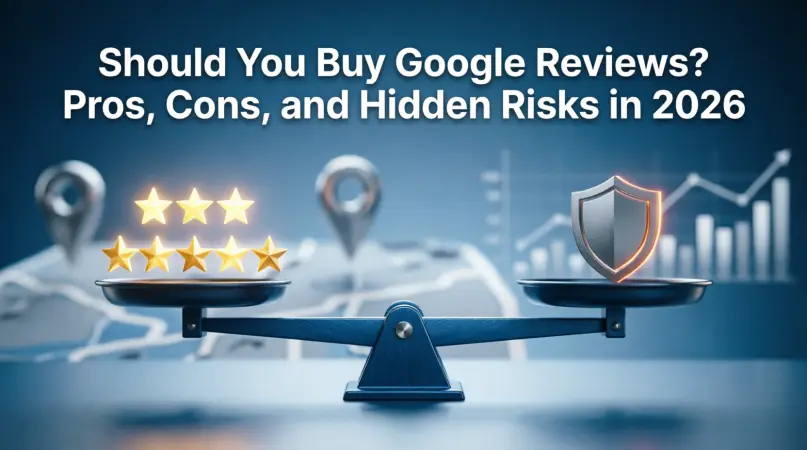
In today’s digital marketplace, local visibility dictates business survival. When potential customers search for services nearby, their eyes immediately gravitate toward star ratings and consumer feedback. This high-stakes environment leads many local business owners to face a critical question: should you buy Google reviews to jumpstart their growth? While the temptation to accelerate social proof is understandable, navigating the modern landscape requires a careful balancing act between immediate conversion benefits and strict algorithmic enforcement.
The Modern Dilemma: Should You Buy Google Reviews for Local Growth?
Deciding whether should you buy Google reviews is rarely straightforward. Business owners are constantly caught between the slow, grinding pace of organic customer feedback collection and aggressive competitors who seem to dominate the local map pack overnight.
The Cold-Start Problem for New Businesses
When launching a new local enterprise or opening an expanded service branch, the initial lack of social proof creates a major barrier. Consumers are hesitant to hire unverified businesses. Overcoming this cold-start problem is the primary driver behind why companies investigate whether should you buy Google reviews as part of an aggressive marketing rollout.
Consumer Reliance on Star Ratings
Studies consistently show that the vast majority of consumers read online reviews before making a purchasing decision. A low review count or a mediocre rating can instantly divert traffic to a competitor. Consequently, exploring whether should you buy Google reviews becomes an appealing shortcut to build instant consumer confidence.
The Core Benefits When You Consider If You Should Buy Google Reviews
Understanding the advantages helps clarify why this strategy remains a staple in aggressive local search optimization campaigns.
Immediate Conversion Rate Optimization
Instant social proof alters consumer psychology. When a listing displays a healthy volume of positive feedback, click-through rates from local map packs soar. Proponents of strategies where should you buy Google reviews point to these immediate conversion spikes as vital for capturing bottom-funnel leads.
Overcoming Competitor Monopolies
In saturated markets like home contracting, legal services, and auto repair, established competitors often hold dozens or hundreds of reviews. Breaking into these entrenched local packs organically can take years, making tactical acquisition methods an attractive equalizer.
The Hidden Risks and Downsides
Despite the short-term conversion lift, ignoring the hazards can spell disaster for your digital presence.
Profile Suspensions and Permanent Removal
Google’s automated filters and manual review teams are harsher than ever. If inorganic acquisition patterns are detected, Google can suspend your entire Google Business Profile. Recovering a suspended listing requires extensive documentation and can shut down your lead generation pipeline for weeks.
Public Reputation Damage from Filter Strips
When automated filters catch bulk manipulation, they don’t just quietly delete the contentthey often leave profiles looking barren or erratic as ratings fluctuate wildly. This instability can erode consumer trust faster than having no reviews at all.
Weighing the Decision: Should You Buy Google Reviews Safely?
For businesses determined to move forward, execution methodology is everything. Unfiltered, instant bulk-dumping is a guaranteed trigger for penalties.
Drip-Feed Delivery Mechanics vs. Instant Spikes
Mimicking natural human behavior requires patience. Rather than receiving 50 ratings in a single afternoon, safe deployment relies on a structured drip-feed framework. Spacing out acquisitions over weeks or months helps maintain algorithmic compliance. For structured deployment options, many professionals explore Buy Google Reviews to Grow Your Online Reputation.
Using Aged, Phone-Verified Accounts
Not all profiles carry the same weight. Submitting feedback from newly created burner accounts with zero digital history triggers immediate red flags. Utilizing aged, verified assets ensures that the engagement mirrors authentic user activity. Strengthening your operational setup with Gmail Accounts and secure management tools like Google Voice Numbers builds a robust infrastructure.
What Happens After You Buy Google Reviews?
Strategic asset management doesn’t stop once feedback is posted; ongoing monitoring is essential to ensure long-term stability.
Monitoring Velocity and Algorithmic Reactions
Business owners must track their profile metrics daily. Sudden drops in rating counts indicate that the algorithm has flagged recent activity. Balancing these acquisitions with multi-channel trust signalssuch as Tripadvisor Reviewshelps diversify your online reputation footprint.
Managing Review Ratios with Organic Feedback
Artificial feedback should only ever serve as a supplement, never a replacement. Combining paid social proof with active SMS and email follow-up campaigns ensures your overall profile ratio remains healthy, authentic, and algorithm-resistant.
Evaluating If You Should Buy Google Reviews for Specific Niches
Different industries face varying levels of platform scrutiny regarding how they manage customer sentiment.
High-Risk vs. Low-Risk Local Sectors
Industries tied closely to consumer safety and high financial transactionssuch as locksmiths, medical practices, and financial advisorsface maximum algorithmic filtration. In these high-risk sectors, evaluating whether should you buy Google reviews demands extreme caution, aged assets, and meticulous pacing compared to low-risk retail or hospitality niches.
Alternative Perspectives Before Deciding If You Should Buy Google Reviews
Before committing to any acquisition strategy, it is wise to audit your existing digital assets and explore all available avenues.
Combining Paid Social Proof with Automated SMS Campaigns
The most successful local marketing strategies blend tactical boosts with automated organic generation loops. Setting up point-of-sale QR codes and automated post-service text messages creates a steady baseline of natural feedback. If you need a customized strategy tailored to your exact industry, feel free to Contact Us for guidance, or head over to our Homepage to review our full range of solutions. You can also explore our educational resources at the Blog Hub.
Strategic Framework for Safe Implementation
If your business decides to move forward, always prioritize risk mitigation over speed.
Vetting Providers for Quality and Longevity
Cheap, low-quality review services utilize automated scripts that Google identifies instantly. Partnering with professional networks that prioritize account age, device uniqueness, and gradual delivery protects your investment.
Final Verdict: Should You Buy Google Reviews in Today’s Market?
Ultimately, determining whether should you buy Google reviews depends on your risk tolerance, current market competition, and execution quality. When used as a calculated supplement alongside a strong organic generation strategy, it can successfully bridge the gap. However, shortcuts taken without proper structural precautions can jeopardize your entire local web presence.
Frequently Asked Questions
1. Should you buy Google reviews for a new business?
While buying reviews can help overcome the initial “cold-start” problem and build instant credibility, it must be done cautiously using aged, verified profiles and a slow drip-feed pace to avoid algorithmic penalties.
2. Can Google suspend my business profile if I buy reviews?
Yes. If Google’s automated filters or manual review teams detect inorganic patterns, sudden velocity spikes, or fake user accounts, they can suspend your Google Business Profile entirely.
3. What is a drip-feed review strategy?
A drip-feed strategy involves spreading out the delivery of reviews over several weeks or months rather than posting them all at once, mimicking the natural, irregular flow of real customer feedback.
4. How can I minimize the risks associated with purchased reviews?
To minimize risks, always use providers that offer phone-verified, aged accounts, maintain a slow delivery velocity, and actively complement your strategy with organic customer feedback collected via SMS and email.