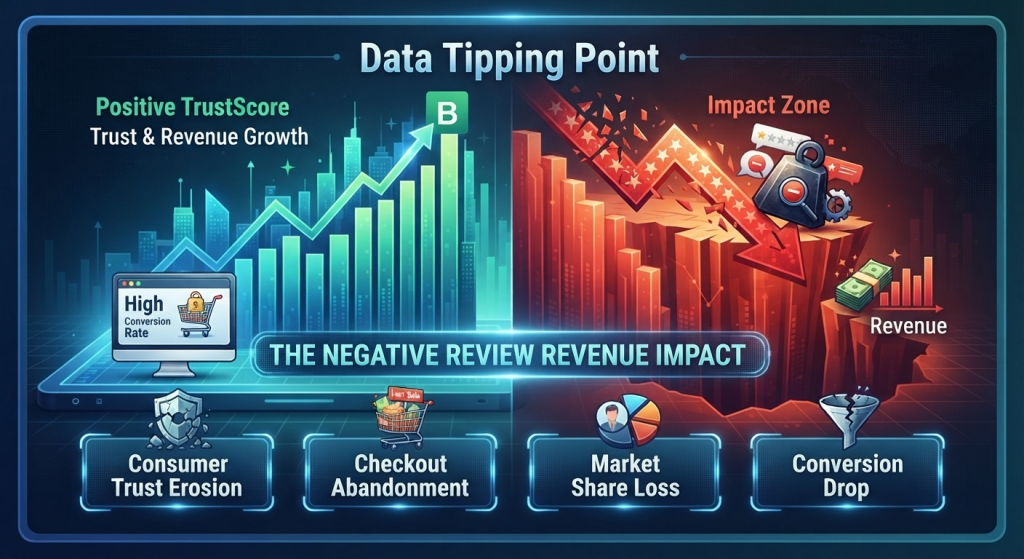
In the modern digital economy, consumer sentiment rules supreme. Prospective clients rarely commit to a brand, sign up for a service, or purchase an e-commerce product without first inspecting peer feedback. For modern digital operations, Trustpilot stands as one of the ultimate arbiters of brand credibility. When a business maintains a stellar rating, conversion rates soar, customer acquisition costs plummet, and organic authority grows exponentially. However, organic review growth is frequently too slow to match the aggressive financial goals of scaling companies. This gap leads many founders, marketing directors, and business owners to ask a critical commercial question: is it safe to buy Trustpilot reviews?
The short answer is nuanced: safety depends entirely on execution, technical infrastructure, and provider quality. If a brand resorts to cheap, automated bot services that flood a profile with low-quality ratings, the consequences can be disastrous. Conversely, when approached through a lens of technical risk mitigation, strategic pacing, and authentic account networks, acquiring ratings can safely bolster a brand’s market position. This comprehensive 2026 risk assessment breaks down the mechanics of platform security, evaluates what happens when shortcuts fail, and outlines the exact standards required for safe execution.
The Commercial Reality Behind Review Acquisition
Before diving into risk mitigation, it is essential to understand why companies look toward external acquisition models. In hyper-competitive niches, getting customers to leave reviews voluntarily is an uphill battle. Even when a product or service is exceptional, only a tiny fraction of satisfied customers take the time to write positive feedback, whereas disgruntled users are quick to complain. This creates an imbalance that skews profile scores downward.
Faced with this reality, decision-makers often look into purchasing non-drop Trustpilot ratings to bridge the gap between their actual service quality and their public digital footprint. Yet, platform algorithms have grown exceptionally sophisticated. Trustpilot utilizes multi-layered machine learning, device fingerprinting, and behavioral tracking to intercept artificial manipulation. Business owners must therefore understand the ecosystem before investing capital into any external growth strategy.
Understanding the Core Risks: Why Low-Quality Strategies Fail
To evaluate whether is it safe to buy Trustpilot reviews, one must first look at what happens when unvetted methods are deployed. Platform compliance teams and automated filters look for specific anomalies. When a company uses low-tier providers, several predictable penalties occur:
1. Instantaneous Mass Purges and Content Scrubbing
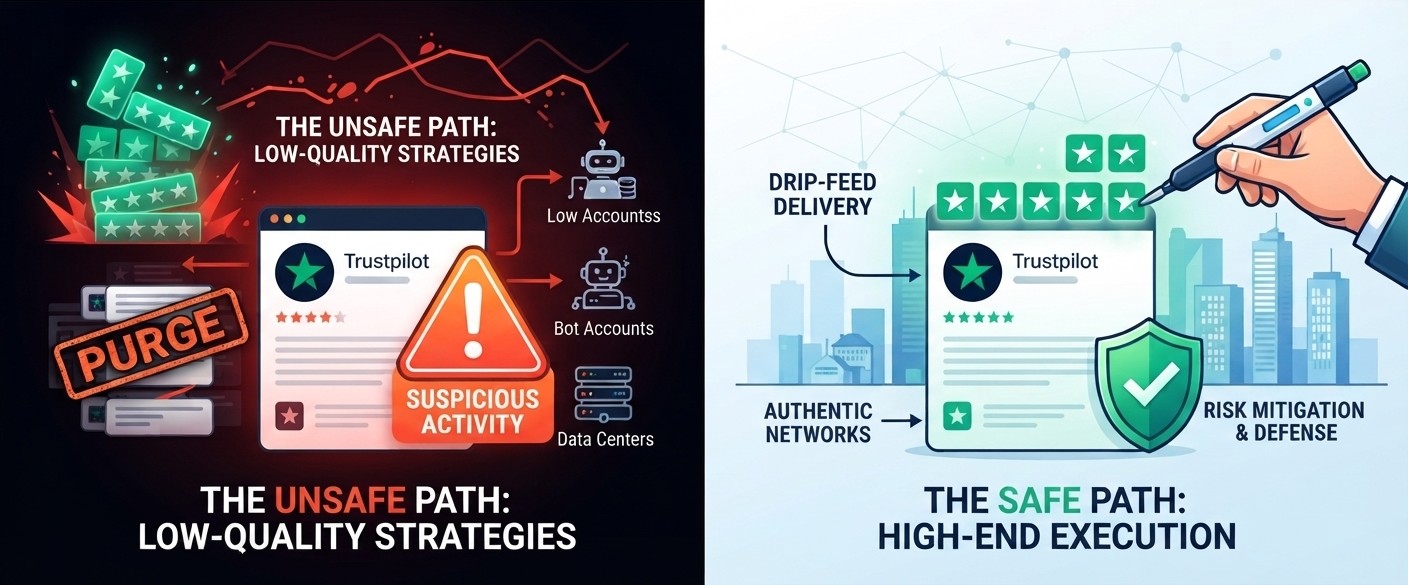
The most common consequence of cheap acquisition is a complete wipeout of the reviews within days of posting. Automated filters track digital metadata, IP addresses, and browser fingerprints. If a batch of reviews originates from data-center proxies or recycled bot accounts, the system flags the anomaly and purges the ratings, leaving the business with wasted capital and a bare profile.
2. Public Consumer Warnings Applied to the Profile
When Trustpilot detects systematic, aggressive manipulation, they do not just delete the offending reviews they frequently penalize the brand publicly. A prominent warning label is stamped onto the company profile, alerting every potential visitor that the business has engaged in suspicious review behavior. This warning destroys consumer trust faster than a bad review ever could.
3. Downstream SEO and Brand Authority Damage
Reputation metrics influence overall digital authority. If a brand gets flagged or restricted on major review ecosystems, the negative sentiment ripples across search engines, lowering conversion rates and undermining broader marketing campaigns.
Analyzing How Automated Filters Evaluate: Is It Safe to Buy Trustpilot Reviews
To successfully navigate market options, marketers must understand how detection software operates. When questioning is it safe to buy Trustpilot reviews, analysts look at the specific parameters that trigger algorithmic sweeps:
- IP and Device Origin: Reviews posted from shared corporate networks, VPN blocks, or known data centers are instantly categorized as high-risk.
- Review Velocity Anomalies: A business that traditionally logs two reviews a month suddenly acquiring fifty ratings in twelve hours creates a velocity spike that flags the entire profile for manual review.
- Account Metadata Deficits: Burner accounts lacking historical activity, profile images, or verified emails carry zero weight and trigger spam filters immediately.
Knowing these parameters explains why evaluating is it safe to buy Trustpilot reviews comes down to avoiding these exact digital footprints through advanced technical safeguards.
Strategic Standards for Risk Mitigation and Safe Execution
Protecting your brand asset requires treating review acquisition with the same technical precision as a software deployment or an SEO campaign. If you want to know is it safe to buy Trustpilot reviews under controlled conditions, the answer is yes, provided you adhere to strict operational standards:
1. Partner with Proven, High-End Providers
The marketplace contains countless low-tier brokers selling volume over quality. Securing your investment means finding a reliable vendor that deploys authentic user accounts with legitimate digital histories, residential IP footprints, and verified device environments.
2. Implement Gradual, Natural Pacing Protocols
Natural customer acquisition never happens in massive, instantaneous blocks. To ensure algorithmic safety, review deployment must mimic organic human behavior. Utilizing drip-feed delivery guarantees that ratings trickle in steadily over weeks or months, completely avoiding the velocity alarms that trigger automated platform purges.
3. Contextualize Feedback with Rich Narrative Details
Reviews should reflect real customer experiences, mentioning specific service touchpoints or product features. Avoid generic, repetitive templates that immediately draw algorithmic scrutiny.
Frequently Asked Questions
- Is it safe to buy Trustpilot reviews for a brand new business profile?It can be safe only if you use advanced risk-mitigation protocols, residential account networks, and strict drip-feed pacing to replicate organic user growth.
- Why do cheap review packages always disappear within a week?Cheap providers rely on automated data-center scripts and reused IP addresses that are instantly flagged and purged by Trustpilot’s automated detection algorithms.
- How can I ensure my acquired reviews stick long-term without getting deleted?Focus on drip-feed delivery methods and work exclusively with high-end providers focused on account authenticity and residential footprints.
- What warning signs indicate a dangerous or unreliable review vendor?Promises of instant 500-star deliveries, rock-bottom pricing, and a lack of transparency regarding account profiles are major red flags.
- Where is the best place to start looking for secure options?Begin by finding a reliable vendor that prioritizes non-drop retention guarantees and custom-paced scheduling.
- Does evaluating whether is it safe to buy Trustpilot reviews depend on my industry?Yes, highly competitive or regulated industries face stricter algorithmic scrutiny, making technical risk mitigation even more essential for survival.