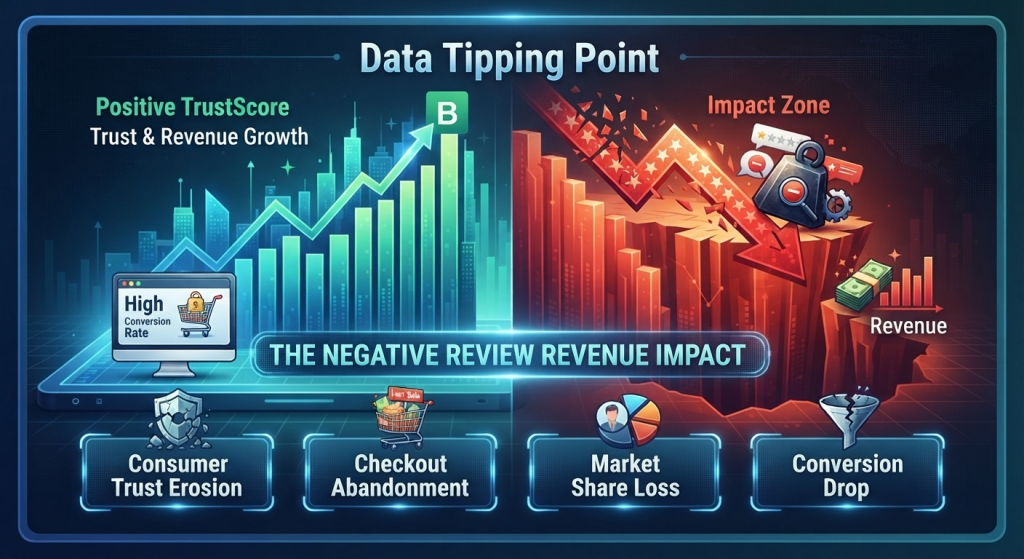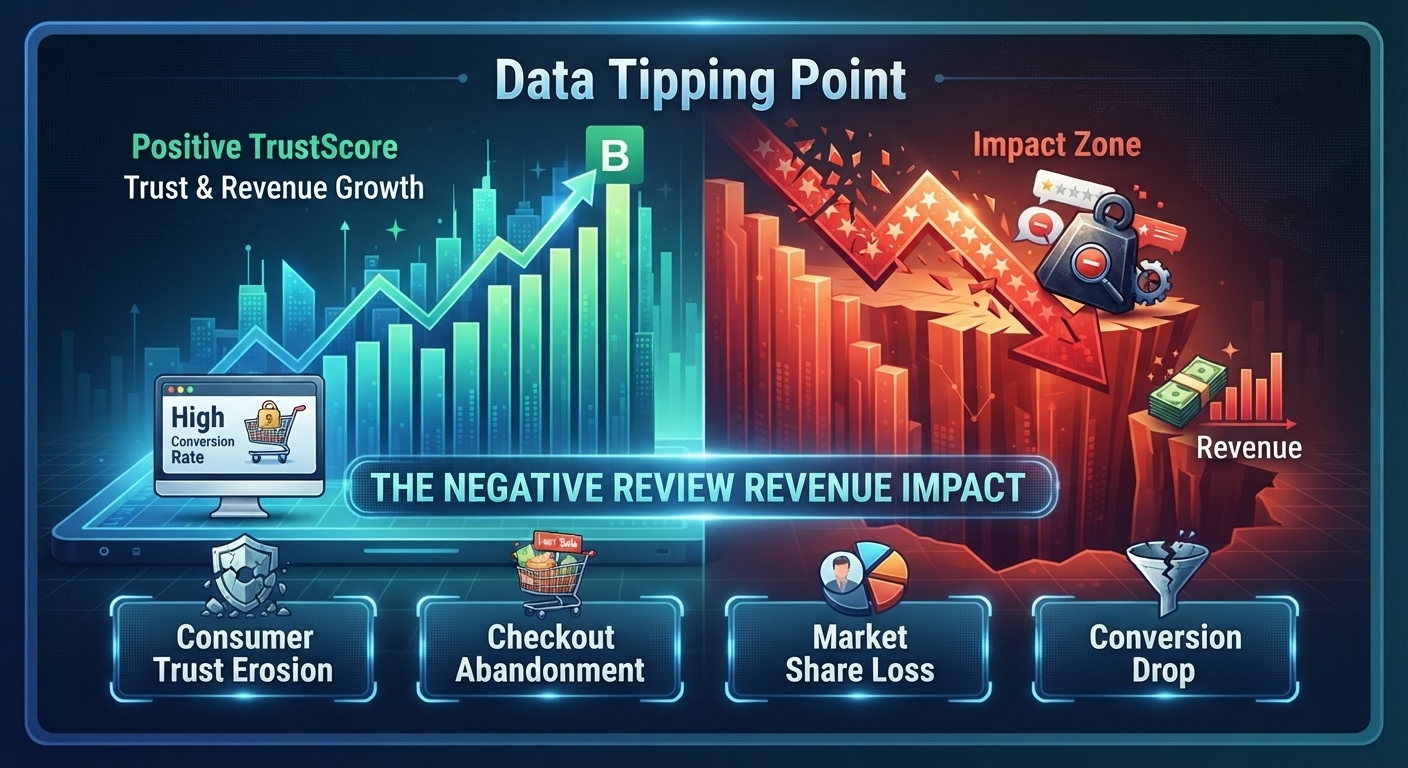
In the competitive landscape of digital commerce, consumer perception dictates financial performance. When a prospective buyer evaluates an online brand, a single low star rating or unanswered complaint can instantly derail a potential sale. This financial vulnerability leads corporate executives and store owners to seriously investigate whether do negative reviews impact revenue and how a damaged TrustScore directly translates to lost checkout conversions.
Unpacking the Financial Question: Do Negative Reviews Impact Revenue?
Understanding the economic weight of consumer feedback requires analyzing modern shopping psychology and conversion funnel analytics.
The Mathematics Behind Trust Thresholds and Cart Abandonment
Consumer trust is fragile. When shoppers encounter a cluster of unresolved complaints on an independent profile, cart abandonment spikes dramatically. Analyzing whether do negative reviews impact revenue reveals a direct correlation between falling TrustScores and immediate drops in average order values across online storefronts.
Consumer Hesitation in High-Stakes eCommerce Niches
In high-ticket online sectors—such as consumer electronics, SaaS subscriptions, and luxury goods buyers perform extensive research before transacting. A substandard public rating acts as an immediate financial deterrent, forcing potential customers straight into the arms of competitors.
The Core Mechanisms of How Low Ratings Harm Sales
Examining the operational fallout of poor public feedback highlights why protecting your profile rating is essential for survival.
Loss of High-Intent Traffic and Ad ROI
Digital marketers invest heavily in paid acquisition and search engine optimization to drive traffic to product pages. However, if visitors land on a storefront marred by negative feedback, that expensive ad budget is wasted. Understanding why do negative reviews impact revenue helps marketing teams realize that reputation management is just as vital as front-end traffic generation.
Damage to Lifetime Customer Value (LTV)
First impressions matter. When a new buyer experiences friction and leaves a public complaint that goes unaddressed, not only is that initial transaction lost, but repeat purchases and brand loyalty are permanently compromised.
Technical Infrastructure and Reputation Recovery
Repairing a damaged brand profile requires structured communication workflows and multi-channel asset management behind the scenes.
Utilizing Verified Communication Channels for Conflict Resolution
Handling customer dissatisfaction efficiently requires dedicated support lines. Many online brands secure professional assets like Google Voice Accounts Setup to streamline dispute resolution, coordinate with customer service agents, and manage client follow-ups professionally.
Diversifying Your Digital Reputation Across Platforms
While Trustpilot is critical for eCommerce, maintaining a stellar reputation requires multi-platform vigilance. Expanding your brand protection to include solutions like Google Review Optimization and specialized Tripadvisor Growth Services ensures that your overall digital footprint remains balanced and resilient against isolated negative spikes.
Addressing the Core Issue: How Negative Reviews Impact Revenue Long-Term
When evaluating whether do negative reviews impact revenue, business analysts look at the compounding effect of negative brand sentiment over quarters and years.
The Compounding Cost of Unmanaged Complaints
An unmanaged complaint does not just sit quietly; it signals to search engines and prospective buyers that customer satisfaction is a low priority. Over time, this erodes brand equity and organic search visibility. For deeper insights into managing algorithmic recovery and sentiment repair, visit our Reputation Management Hub for expert guides.
Mitigating Risk Through Proactive Feedback Management
To counter the financial damage of poor ratings, brands must implement proactive feedback loops. Encouraging satisfied buyers to share positive experiences dilutes the impact of occasional anomalies.
Strategic Frameworks to Protect Your Bottom Line
Safeguarding your enterprise from revenue loss requires a systematic approach to customer experience and social proof management.
Turning Customer Service into a Conversion Tool
Responding constructively to negative feedback in a public forum demonstrates accountability. Prospective buyers often look at how a brand handles adversity rather than just expecting perfection. Knowing whether do negative reviews impact revenue allows management teams to prioritize customer service training and resolution speed.
Maintaining a Steady Inflow of Positive Validation
Balancing your profile score requires consistent, positive customer feedback. For strategic guidance tailored to your specific store requirements, feel free to Custom Support and Strategy to speak with our experts directly.
Measuring Financial Recovery and TrustScore Health
Tracking financial metrics alongside reputation analytics ensures your corrective strategies are driving tangible results.
Monitoring Conversion Lifts and Revenue Growth
Keep a close eye on your store’s conversion rate, checkout completion metrics, and overall TrustScore. As your profile health improves, you will observe a direct, positive lift in overall revenue performance.
Conclusion: Securing Your Financial Future Through Reputation Management
Evaluating whether do negative reviews impact revenue leads to an undeniable conclusion: public sentiment directly dictates financial success in modern commerce. By maintaining responsive customer service, utilizing secure communication tools, and proactively building positive social proof, you can protect your bottom line and scale your brand securely.
Frequently Asked Questions (FAQ)
1. Do negative reviews impact revenue on Trustpilot?
Yes, do negative reviews impact revenue directly by increasing cart abandonment, deterring high-intent buyers, and lowering overall store conversion rates.
2. How can a business recover from a low TrustScore?
Recovery involves actively resolving customer disputes, responding constructively to complaints, and implementing automated post-purchase sequences to gather fresh, positive feedback.
3. Does public complaint handling influence prospective buyers?
Yes, prospective buyers closely observe how a brand handles negative feedback; a professional and rapid response can turn a negative situation into a trust-building opportunity.
4. Why is multi-platform reputation management important?
Managing your reputation across multiple platforms (such as Trustpilot, Google, and TripAdvisor) ensures that isolated negative complaints on one channel do not tank your entire online brand authority.